Development of Cloud System with Agricultural Tacit Knowledge
- Summary
In the roles of Project Manager and Lead Developer, I have successfully released IoT-based AI cloud systems for smart agriculture. These systems utilized AI models trained to apply agricultural tacit knowledge, enabling automated irrigation and providing recommendations on farming. I established methodologies to train these models by collaborating with external experts, addressing the challenge of overfitting on training data. I managed the proof-of-concept process, ensuring our systems enabled clients to achieve a 120% increase in harvest yield.
- Motivation
This project has been launched to tackle the social issue regarding with a declining number of skilled agricultural workers.
- Team & Role
In my role as Lead Developer, I led a team of 11 developers designing and integrating AI models into cloud systems. In addition, as Project Manager, I managed collaborative projects with partners, and took charge of overseeing contract negotiations, conducting proof-of-concept evaluation, and addressing diverse technical challenges.
- Results
- Successfully developed and deployed a cloud-based AI system, driving a 120% increase in client sales.
- The launched AI systems that recommend five operations-irrigation, fertilization, pruning leaves, pruning flowers, and pruning side branches-that significantly impact harvest yields.
- Established a methodology for quantifying agricultural tacit knowledge.
- Challenges
One of the main challenges we faced was enabling AI models to learn agricultural tacit knowledge, which is only gained through hands-on experience. At the beginning of the project, I was uncertain about the approach to tackle this. Additionally, we had to overcome the issue of overfitting since the long cultivation term led to sparse data availability.
- Solutions
I facilitated activities to bridge the gaps between specialized domains and fostered synergy within multicultural teams which resulted in innovative breakthroughs in establishing methodologies for training AI models. These methodologies are structured as follows:
- Step 1: Machine learning frameworks based on agricultural experience.
- Step 2: Indices derived from biological principles.
- Step 3: Hierarchical framework designed to reduce complexity.
- Step 4: Standardization based on factory automation theory.
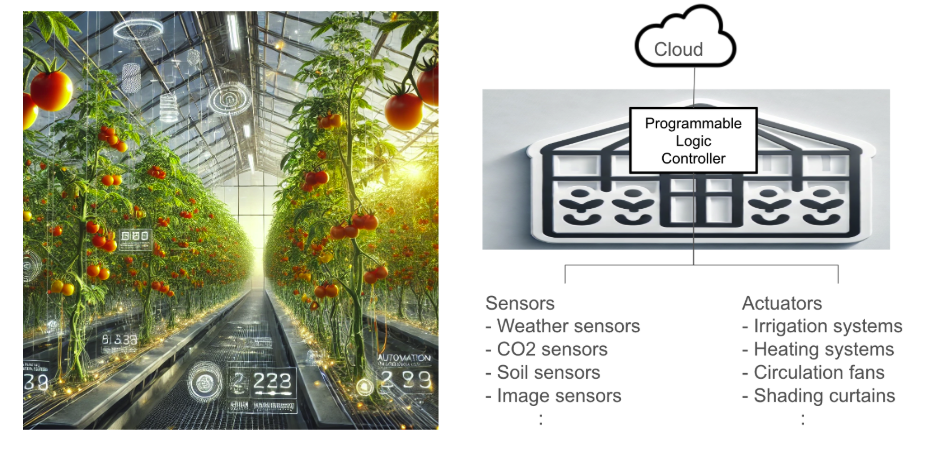
I have immersed myself in cultivation works for six months, and then the experts and I have realized tacit knowledge could be learned from three essential factors. The first factor is the state of crops, which reflects the health status of the plant. The second is environmental data which includes chronological metrics, such as temperature, radiation, humidity, CO2 levels, and soil moisture, which are transmitted from IoT sensors. The final factor is actions, which refer to processes like irritation, fertilization, and pruning of leaves and flowers.This invention is patent pending.
Furthermore, experts and my team identified universally applicable indices, which played a crucial role in preventing overfitting. We concluded that most agricultural experts assess plant growth by observing the balance between vegetative and reproductive growth. Through iterative experiments, we figured out that plant growth can be determined by indices of vegetation and reproduction, ensuring consistent evaluations regardless of environmental conditions.
Detection on the indices of vegetarion and reproduction enabled our team to establish a hierarchical framework. This framework reduced the number of variables required for training models, significantly reducing the complexity of modeling process. The top layer is a sequential layer which includes variables that follow a chronological relationship, which can be predicted based on elapsed days or accumulated temperature. The middle layer is a conditional layer. The variables in this layer are determined by multiple conditions, such as if-then rules. The bottom layer contains indirectly observable data, with processes shaped by black box logic. Each layer employs a distinct approach, making it drastically simplify the modelling process.
| Layer | Data | Approach |
|---|---|---|
| Sequential layer |
| Formularization, e.g. f(t): t is elapsed days |
| Conditional layer |
| If then rules |
| Invisible layer |
| Machine learning |
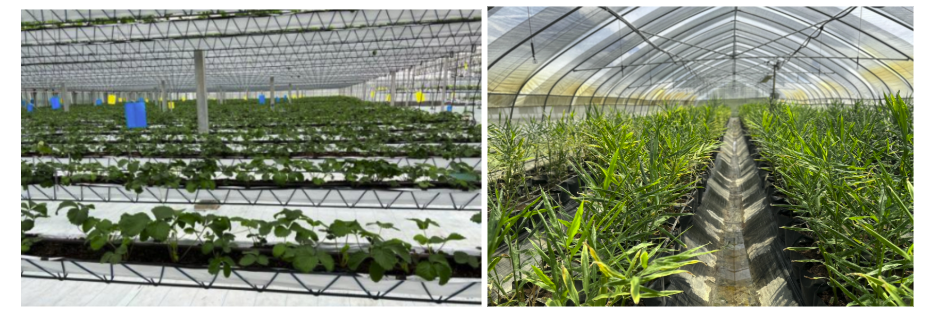
We appleid quality control theory to cultivation practices by conducting iterative experiments based on the design of the experiments framework. I also encouraged the development of instruction manuals to standardize the cultivation process while referencing a quality control in a factory automation. These processes enabled the AI models to mitigate the influence of external factors, such as human error and variation between individuals. As a result, we successfully completed training the AI models and integrated them into the cloud systems for the cultivation of cherry tomatoes, enabling clients to achieve a 120% increase in the harvest yield. Furthermore, we extended these methodologies to other crops, such as strawberries and gingers, which led to the expansion of the project and the establishment of new partnerships with two major agricultural companies.